
In a world where buyers expect instant clarity and immersive experiences, XR tools like augmented reality and virtual showrooms give companies a decisive edge. They allow customers to explore products in full detail—at scale, in context, and from any device—removing the guesswork that slows down decisions. Complex machinery, architectural spaces, or multi-step processes can be demonstrated in ways traditional photos, PDFs, or even videos simply can’t match. The result is deeper understanding, higher engagement, and a faster path to “yes.”
Complex products are hard to evaluate through photos, PDFs, and videos alone. Interactive XR experiences let buyers explore every detail, understand how things work, and make confident decisions faster.
XR stands for “Extended reality” and includes Augmented Reality (AR), Virtual Reality (VR) and Virtual Showrooms.
A new way of integrating digital and virtual elements into a more immersive experience for:
Beyond elevating the customer experience, XR also streamlines internal workflows. Sales teams gain interactive demonstrations they can tailor in real time; marketing teams get dynamic content that stands out; and technical teams can reduce repetitive explanations by letting the visuals do the work. Whether used for pre-sales, training, product launches, or trade shows, XR experiences make every interaction more memorable, more efficient, and more aligned with how modern buyers want to learn.
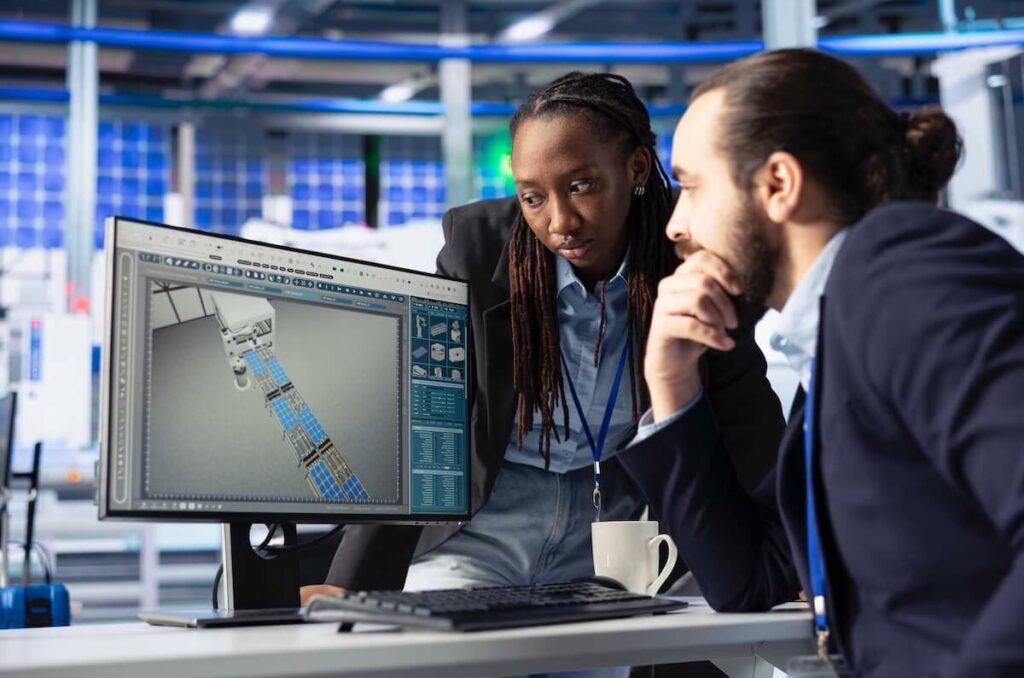
XR (extended reality) covers augmented reality (AR), virtual reality (VR) and interactive 3D. For industrial companies, it lets buyers explore equipment in full detail without shipping a machine or visiting a plant.
AR places a 3D model of your product in the buyer’s real space through a phone or tablet, which is ideal for showing size and fit on a plant floor. VR puts the buyer inside a fully virtual environment through a headset, which works best for walkthroughs of large systems and for trade show demos.
A virtual showroom is an online, interactive space where buyers explore your products in 3D: rotate them, look inside, see them operate and request a quote. It is available around the clock, usually right in a web browser.
Yes. CAD models are the usual starting point for XR. They speed up production and keep every detail accurate.
Yes. XR lets you demonstrate machines that are too large or heavy to ship, on a tablet, touchscreen or headset in your booth. The same 3D assets keep working online after the show.
It depends on the number of products, how interactive the experience is, and which devices it runs on. Reusing 3D models from existing animation work lowers the cost considerably. Book a consultation and we will give you a fixed quote.